
Best Offshore Real Estate Investments in 2026
Offshore real estate has become a core strategy for globally minded investors. A well-chosen property can provide rental income, currency diversification, residency pathways, and long-term capital appreciation - while offering a meaningful lifestyle component.
The key is selecting markets where pricing, demand, legal structure, and infrastructure align.
Below, we rank the best offshore real estate investments in 2026 using a structured investor framework - blending affordability, rental performance, legal security, demand drivers, risk profile, and liquidity.
Offshore Real Estate Comparison
| Location | Affordability (Min Investment) | Typical Rental Yield | Highlights |
|---|---|---|---|
| Zanzibar (Tanzania) | From ~USD 100,000 (approved developments) | ~8–15% | Fast-rising tourism, expanding airlift, global brands entering |
| Dubai (UAE) | From ~USD 200,000–300,000 (freehold zones) | ~5–7% | High liquidity, tax-free structure, mature legal framework |
| Bangkok (Thailand) | From ~USD 120,000 (condominiums) | ~5–8% | Strong tourism base, urban demand, accessible pricing |
| Portugal | From ~EUR 250,000+ | ~4–5% | EU legal clarity, stable tourism, reliable resale market |
| Mauritius | From USD 375,000 (residency schemes) | ~4–6% | Freehold in structured schemes, political stability |
How We Determined the Ranking
Each market was evaluated across six criteria:
1. Affordability
Entry pricing, transaction costs, and access for foreign buyers.
2. Rental Fundamentals
Tourism scale, average stay duration, occupancy strength, and achievable yield ranges.
3. Legal Security
Clarity of foreign ownership rules, resale rights, inheritance protections, and capital repatriation.
4. Demand Engine
International arrivals, air connectivity, global brand presence, and long-term tourism positioning.
5. Risk Profile
Political stability, currency exposure, regulatory predictability, and infrastructure maturity.
6. Execution & Liquidity
Ease of buying, quality of developer ecosystem, financing availability, and resale depth.
Markets that combine accessible pricing with expanding demand and structured ownership score highest.
1. Zanzibar, Tanzania
Zanzibar ranks top because it brings together affordability, tourism momentum, and improving investment structure within a market that is still scaling.
Entry levels in approved developments begin around USD 100,000, significantly below most beachfront-oriented offshore markets. That pricing dynamic supports stronger income potential and leaves room for capital appreciation as infrastructure and demand expand.
Rental performance in the luxury segment typically ranges between 8–15% gross, depending on location, design quality, and management model. Premium beachfront villas, such as Sandbank Villas, forecast up to 17% returns, benefiting from high nightly rates during peak season and longer average stays, which help smooth occupancy across the year.
Visitors stay an average of 7–8 nights, supporting stable occupancy across professionally managed villas.
Tourism growth is measurable and sustained. International arrivals reached 917,167 in 2025, up 25% year-on-year, with tourism earnings approaching USD 1 billion.
Foreign buyers invest through government-approved developments under the Zanzibar Investment Act, which provides defined repatriation rights and renewable long-term lease structures. While ownership is leasehold rather than freehold, resale and inheritance rights are clearly defined within these frameworks.
The demand engine continues to strengthen. Roughly 70% of visitors come from Europe, and the island is now served by more than 34 direct international routes. Major brands including Four Seasons, Anantara, and Marriott have committed to developments on the island, reinforcing long-term confidence.
Zanzibar sits in a phase where pricing remains accessible while visibility and infrastructure are expanding. That balance underpins its position as the best offshore real estate investment in 2026.
For a wider view of why international buyers are turning to the island, explore our guide reasons to invest in Zanzibar real estate.
2. Dubai, UAE
Dubai offers one of the most structured and liquid offshore real estate environments globally. Freehold ownership in designated zones, no income tax, and a transparent registry system provide strong legal clarity.
Tourism remains a core strength. The city welcomed 19.59 million international overnight visitors in 2025, supporting consistent short-term rental demand.
Gross rental yields typically range between 5–7%, depending on location and asset type.
However, pricing reflects maturity. Entry levels are higher than emerging markets at $200,000–$300,000, and appreciation has already been substantial in prime districts. Liquidity, however, remains deep, and resale timelines are generally efficient.
Dubai suits investors prioritising structure, scale, and resale flexibility within a mature global market.
3. Bangkok, Thailand

Thailand combines scale with accessibility. The country welcomed 32.9 million international visitors in 2025, reinforcing strong tourism fundamentals.
Bangkok, in particular, benefits from both tourism and regional business travel, creating diversified rental demand.
Foreign investors may purchase condominiums within a 49% foreign quota per building, though land ownership remains restricted.
Execution is relatively straightforward for condominium purchases, and pricing remains accessible compared with many global capitals.
Yields typically range from 5–8% in strong urban areas. The market offers consistent demand rather than scarcity-driven beachfront upside.
Thailand appeals to investors seeking steady urban rental income at moderate entry levels.
4. Portugal
Portugal offers European legal security and long-standing tourism stability. The country recorded 82.1 million overnight stays in 2025, reflecting steady demand across Lisbon, Porto, and the Algarve.
Freehold ownership, EU legal protections, and a transparent property registry system provide clarity. Average gross rental yields tend to sit around 4–5%, reflecting a mature and relatively stable market.
Entry pricing is higher than emerging markets (EUR 250,000+), and appreciation is typically gradual rather than rapid. Resale liquidity is strong, particularly in established neighbourhoods.
Portugal fits investors seeking stability, transparency, and moderate yield within a European framework.
5. Mauritius
Mauritius remains one of the Indian Ocean’s most structured foreign ownership markets. Investors may purchase freehold property within approved development schemes, with residency eligibility generally requiring a minimum investment of USD 375,000.
Tourism performance remains steady, with hotel occupancy averaging around 68% in early 2025.
The island offers political stability and a favourable tax environment. But pricing reflects its established reputation, and yields typically range between 4–6%. The market emphasizes stability and structured ownership over rapid growth.
Mauritius appeals to investors prioritizing residency-linked ownership and long-term predictability.
Explore Ownership in Zanzibar
Across each market, different strengths emerge. Some prioritize liquidity. Others emphasize legal clarity or stability.
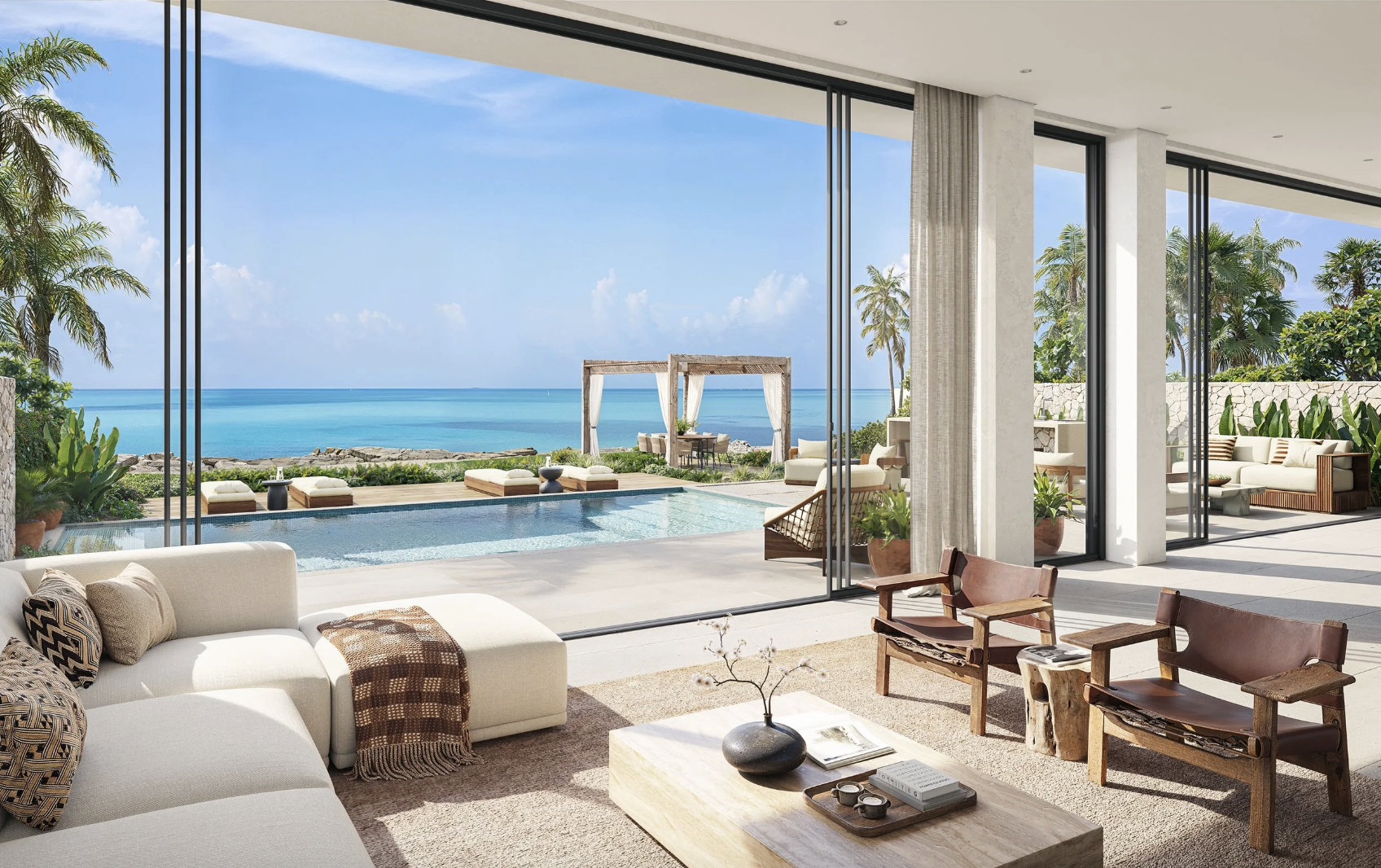
Zanzibar combines accessible entry levels, expanding tourism demand, structured foreign investment pathways, and one of the rarest assets in global real estate today: available beachfront. In most established island destinations, prime shoreline was secured long ago. Zanzibar remains one of the few markets where investors can still acquire direct beachfront property at this stage of growth.
In Nungwi, where calm waters and year-round swimming anchor demand, Sandbank Villas offers professionally managed luxury beachfront villas within an approved development framework aligned with Zanzibar’s growth phase.
To explore ownership details, rental structure, and legal framework, get in touch and request a brochure.